Explore the latest news and find out what's on this month
Explore our learning offer for schools, families and community groups
Uncover the rich history of Elmbridge with our latest online exhibitions
Want to discover more about your local area?
Explore the latest news and find out what's on this month
Explore our learning offer for schools, families and community groups
Uncover the rich history of Elmbridge with our latest online exhibitions
Want to discover more about your local area?

Work experience student Isobel
Hello! My name is Isobel and I’m a Year 11 student at Tiffin Girls’ School in Kingston. I studied Latin and History for my GCSEs and have always been interested in local history and archaeology, so I decided that completing work experience at Elmbridge Museum would be the perfect way to learn about the many different forms a potential career in heritage could take and gain some insight into the behind-the-scenes workings of a museum with such a unique outreach-based approach as Elmbridge’s.
Overall, I had a fantastic time during my placement from 30th June- July 3rd: Susie, Sophie, Sue, Paul and Lydia all gave fascinating insights into the day-to-day running of the museum, and I can’t thank them enough for making the experience so fun and educational.
After receiving my security pass, Sophie (the museum’s Collections Project Officer) showed me around the museum’s facilities in the Civic Centre, from the outreach resources in the basement (originally built to be a nuclear bunker) to the storage for some of the items recovered from the museum’s Elmgrove store. Afterwards I headed to the museum’s area in the office for a welcome from Susie (the Museum Manager), with a brief introduction to Elmbridge’s unique structure as an outreach museum and all of its benefits and detriments: although the museum’s exhibits being spread across the borough can provide challenges when it comes to transporting items from the collection to exhibitions, but it also makes local history far more accessible instead of limiting it to one museum building.
Next, Sue (the museum’s Collections Officer) showed me how to navigate EMu, the museum’s online collection database, and search for specific items. Currently EMu has data on some 43,000 objects, but Sue and Susie believe that the museum’s collection contains closer to 50,000!
For the afternoon, I was set the task of making a presentation based around Elmbridge’s Tudor history, taking some inspiration from artefacts in the collection. Exploring the collection was a great way to put my learning from the morning into practice, as well as finding out more about an incredible period of time in Elmbridge’s history, especially regarding Oatlands Palace and the area’s history with the monarchy.
Below you can see some examples of the objects that I found on EMu.
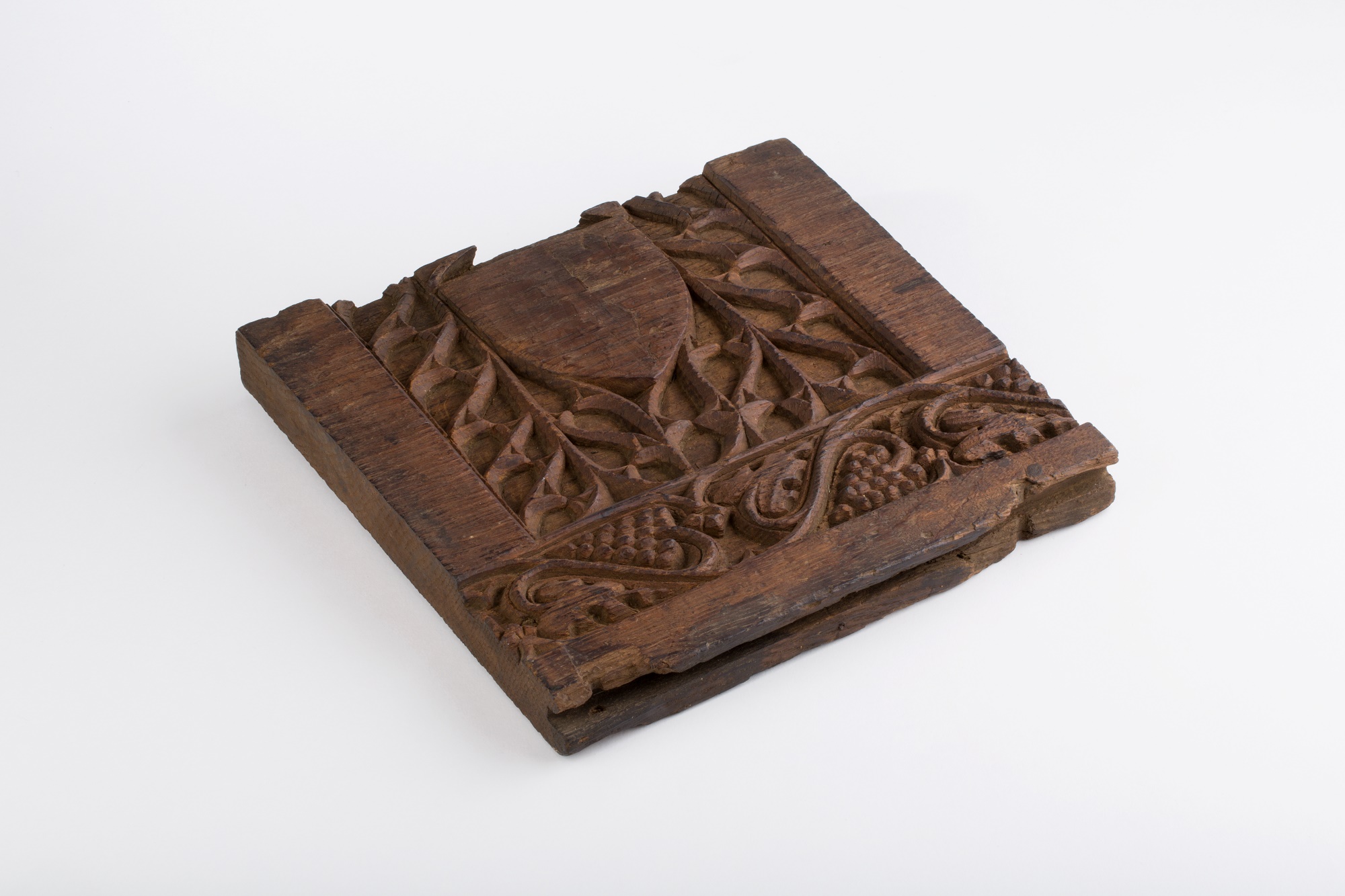
A piece of wood panelling recovered from Oatlands, once bearing the coat of arms of the Rede family who originally owned the lands on which Oatlands Palace was built.
Henry VIII forced the Redes to move to Sussex so he could build the palace for his fourth queen, Anne of Cleves.
Piece of wooden panelling from Oatlands Palace, with the obliterated coat of arms of the Rede family in the centre.
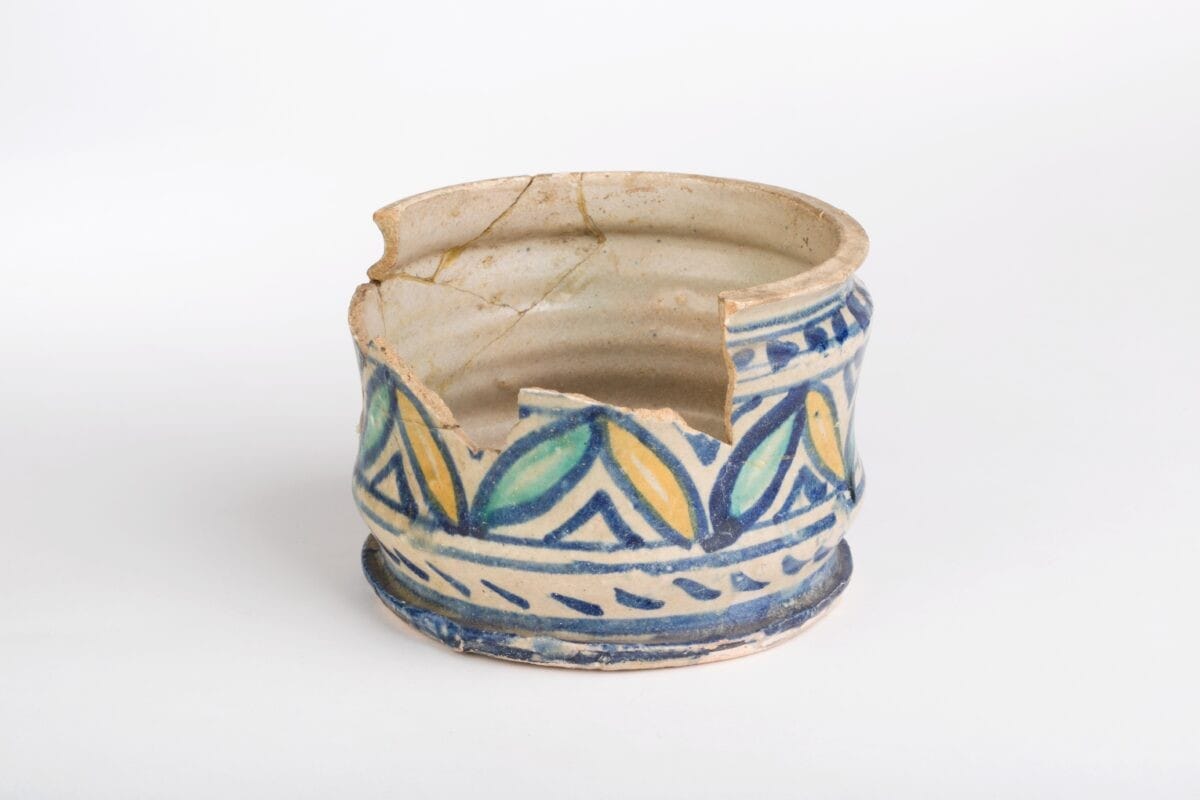
Albarello jug
This is a fashionable way to store herbs and ointments imported from Italy. It was likely used to contain royal medicine at Oatlands Palace.

The main room at Luxfords. The museum’s giant Jacobean wall painting is in the box on the right.
The day started with an introduction from Susie to the museum’s history and its place in the borough council, alongside some interesting facts about objects from the collection- their biggest artefact is a 10-foot section of wall painted with a Jacobean mural!
Susie also gave us a more in-depth explanation of the outreach museum model and plans for the museum’s future based on the change in Surrey’s organisation from boroughs to unitary authorities, alongside other plans such as getting more volunteers involved and making the museum’s collection more accessible to the public.
We also got a brief look into the planning process for a new commemorative project currently being organised by the museum.
Back in the office, Sophie introduced us to the museum’s system for dealing with items that might pose a risk to- or currently be at risk from- volunteers and museum staff handling the collection.
From old glow-in-the-dark paints containing radium to gas masks with asbestos filters, museums like Elmbridge have to carefully register items to make sure risks during transportation and display are minimised.
This is more important than ever now, as the museum is working hard to rescue objects from its Elmgrove store, some of which will be hazardous and require delicate handling.

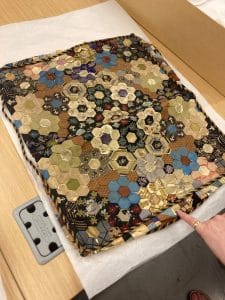
A quilted Victorian cushion cover.
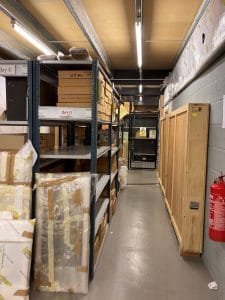
In the afternoon, Susie drove us to the museum’s store at Luxfords, where we were able to observe some of the artefacts from the collection in person.
We learnt about the careful conditions certain items have to be preserved in, especially important as we visited on one of the hottest days of the year and had to be particularly careful not to let the conditions damage any of the more delicate objects.
The collection is certainly varied, containing everything from finely embroidered Edwardian dresses to brooches made of human hair! We spent hours poring over artefacts and seeing if we could locate anything from EMu in the stores, as well as taking note of any particularly interesting items that weren’t well-documented online.
Unfortunately, a great deal of the museum’s collection can only be displayed for a short time and the storage facilities aren’t really available for public access, so it was a great privilege to get a closer look into the intricacies of the museum’s storage system and the more tragically hidden parts of the collection.
Lots of the items at Luxfords don’t have photos on EMu, and even fewer have an entry on the museum website, so we weren’t expecting to find something as beautiful as this cushion cover!
In the morning, Learning and Outreach Officer Paul explained the museum’s learning programme for local schools, from discovery boxes used to teach Elmbridge’s history through games and artefacts to the workshops and assemblies they run to further engage students. We also got to see some new plans for resources for KS3 students, which would help to attract even more schools to the programme.
In the basement we got a closer look at the museum’s learning resources, accompanied by explanations from Paul regarding how the boxes encourage students to think more critically about history.
Currently Paul and Jodie are shifting the museum’s outreach approach away from the arts and crafts-based sessions run previously to focus more on learning and getting students excited about local heritage and history specifically.
In the afternoon, Exhibitions and Interpretation Officer Lydia taught us more about her job, as the main coordinator for the museum’s exhibits around Elmbridge. Although the size of the display spaces can limit the kind of exhibitions the museum can put on and conditions in libraries and leisure centres can’t be as easily controlled as they would be in a larger museum, Elmbridge Museum doesn’t have the same limits as local museums located in one small building, where most displays are permanently focused around the collection’s most interesting objects, so exhibits change regularly and hundreds of artefacts can be revealed to the public.
We visited the ‘Excavating Oatlands’ exhibition in the Civic Centre, the museum’s largest display case, and heard more from Lydia on the process of putting the case together, creating a narrative to interest all visitors whilst considering practical limitations.
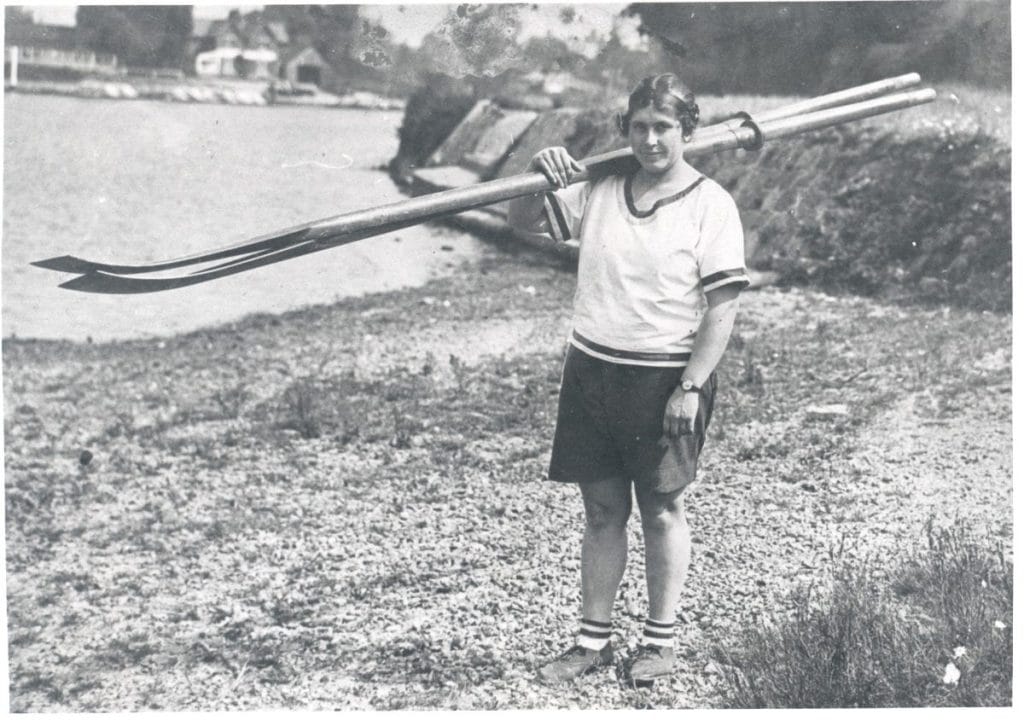
Later, we were tasked with planning a potential exhibition based on local rower and women’s rights advocate Amy Gentry.
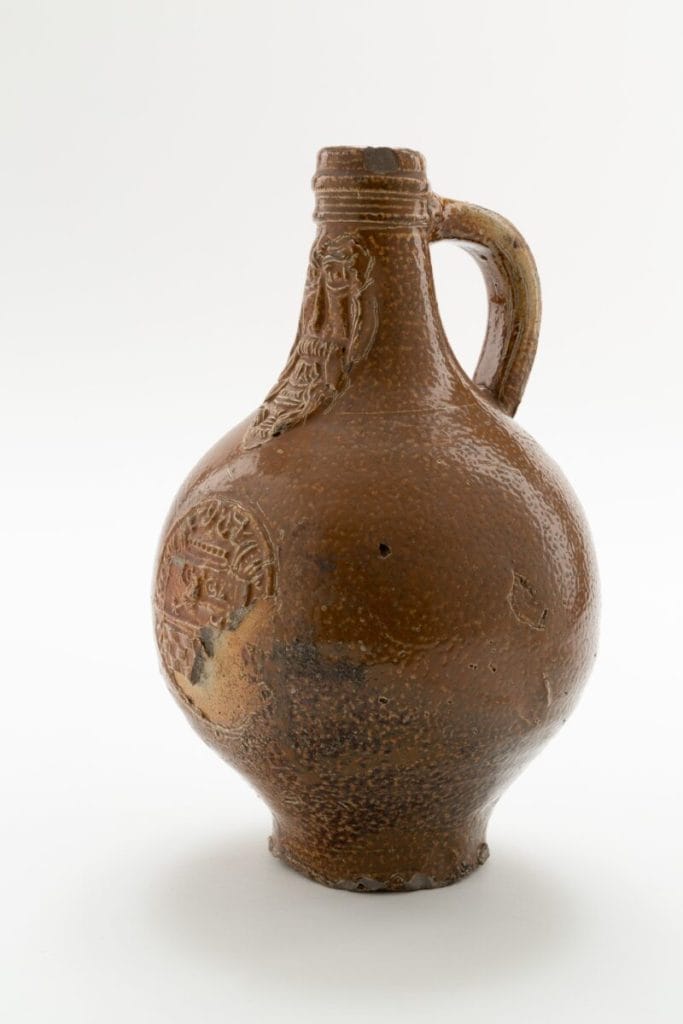
A bellarmine jug, the focus of one of my posts
On my final day at the museum, I was tasked with creating potential social media posts for the museum and researching how other museums use their online presences to gain attention and attract new audiences.
Although Elmbridge Museum doesn’t have its own social media accounts separate from the Council, it was interesting to theorise about potential directions it could take, whether purely educational or more focused on jokes and the eccentricities of the collection, like museums such as the Museum of English Rural Life in Reading.
Social media can be a great tool for reaching out to people in Elmbridge and beyond who might otherwise not be interested in history and getting more information to the public about museum-run events, so I greatly enjoyed coming up with some posts of my own.
I finished the day with a relaxing afternoon of completing some of my tasks from the week and talking more to the museum staff about their areas of expertise, as well as looking through EMu and discussing some of the stranger objects in the museum’s collection.
Overall, my week with Elmbridge Museum has been an amazing way to find out more about the different aspects of working with history, and helped me figure out what a career in a museum might look like for me.