Explore the latest news and find out what's on this month
Explore our learning offer for schools, families and community groups
Uncover the rich history of Elmbridge with our latest online exhibitions
Want to discover more about your local area?
Explore the latest news and find out what's on this month
Explore our learning offer for schools, families and community groups
Uncover the rich history of Elmbridge with our latest online exhibitions
Want to discover more about your local area?
On the 26th September the government instructs local councils to prepare for potential air raids in case of war.
A practice air raid is held in Walton and Weybridge.
The government instructs people to carry their gas masks with them at all times.
Britain declares war on Germany. Children are evacuated from towns and cities and blackouts begin.
What event happened on 1st September that led to Britain declaring war on Germany?
Petrol rationing begins.
The National Register is established and identity cards are issued.
Food rationing begins on “Coupon Monday”
Unmarried women between 20 and 30 years old are called up for military service.
It is announced that school uniforms can only be blue or grey to save on dye.
The Walton and Weybridge Savings Committee raises £564, (£164 above target) during the Wings for Victory campaign. This was sufficient to buy 28 Wellington Bombers
Allied forces land in Normandy to begin the invasion of Europe.
Do you know what this military operation was called?
The first V-2 rockets fall on London.
Following the unconditional surrender of the Axis powers, the Allies accepted Germany’s surrender. On V.E. Day people celebrated the end of the war with street parties.
What does V.E. Day stand for?
Elmbridge was close to London and also had a number of factories that were important to the war effort. Air raids would have been a frequent occurrence during the Second World War.
Take a look at the pictures below to see the impact they had and how the local communities prepared for the air raids.
Buildings in Greenways, Hinchley Wood were badly affected by air raids.
The result of a direct hit could be devastating. This house in Greenways, Hinchley Wood, was almost completely demolished.
In Cobham, a bomb left this huge crater in the town. You can see a row of houses in the background, showing how close the bomb was to people's homes.
The Home Guard helped communities prepare for and recover from air raids. Here members of the No. 6 Platoon Weybridge Home Guard clear up the wreckage at the Electric Furnace Company in Queens Road, Weybridge.
Fires were put out by the AFS (Auxiliary FIre Service). Here they are pictured outside Elmgrove in Walton-on-Thames standing next to their hand-drawn water pump.

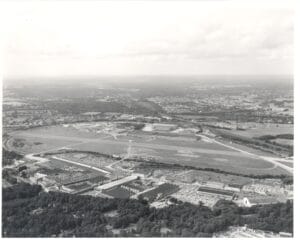
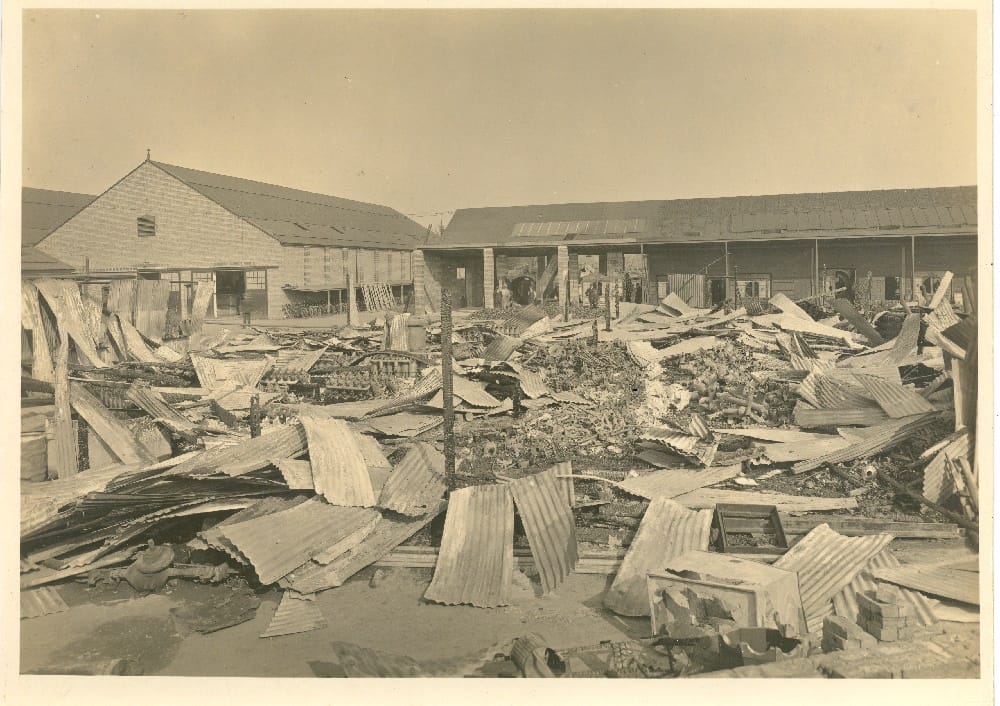
One of the worst incidents during the war was the bombing of the Vickers Armstrong Factory. The factory was based in Weybridge and produced Wellington bombers. Aircraft production was already an important part of the war effort, and the government knew that these factories were vulnerable to attack. Efforts were made to prevent them being located by German bombers, such as camouflaging the buildings and covering the nearby Brooklands race track with netting.
However, on Wednesday 4th September the Luftwaffe (the German airforce) launched a surprise attack.
Read George’s story, a first hand account of the events that day.
“Cyril Brown and myself, we were sitting down by the front of a lorry, leaning against the wheel. We’d been waving to the girls, they’d been waving to us, and then suddenly we heard this noise.
Out of this most brilliant day coming out of the sky were these airplanes…
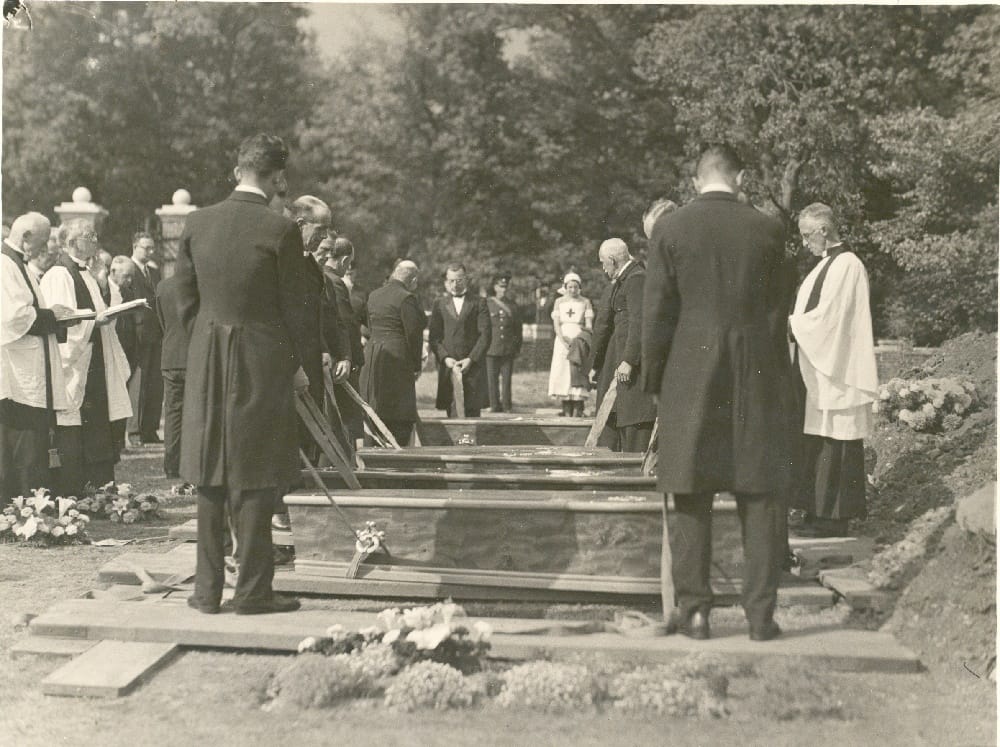
Image of funeral for casualties of Air Raid at Vickers Armstrongs Ltd, Brooklands. (152.1964/6)