Newcomers to the Cobham area often comment on the attractive avenue of cherry trees that line either side of the Stoke Road and the entrance to Mizen Way on the Tilt Green. But do you know what they represent?
The Avenue of Remembrance
44 trees make up the Avenue of Remembrance, each with a special significance.
Originally planted by the Cobham Village Women’s Institute in February 1946, each cherry tree commemorates a lost life from Cobham during the Second World War.
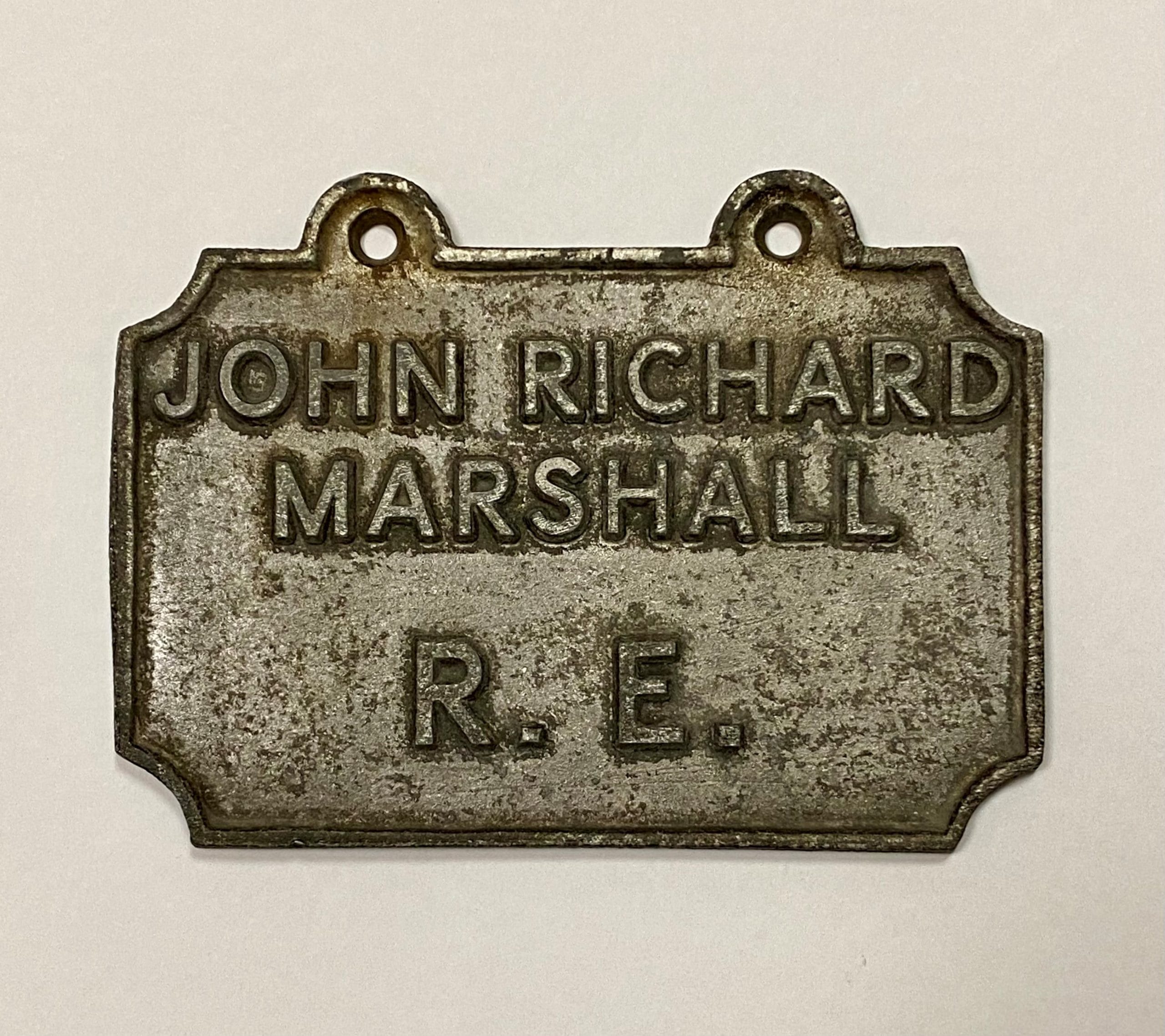
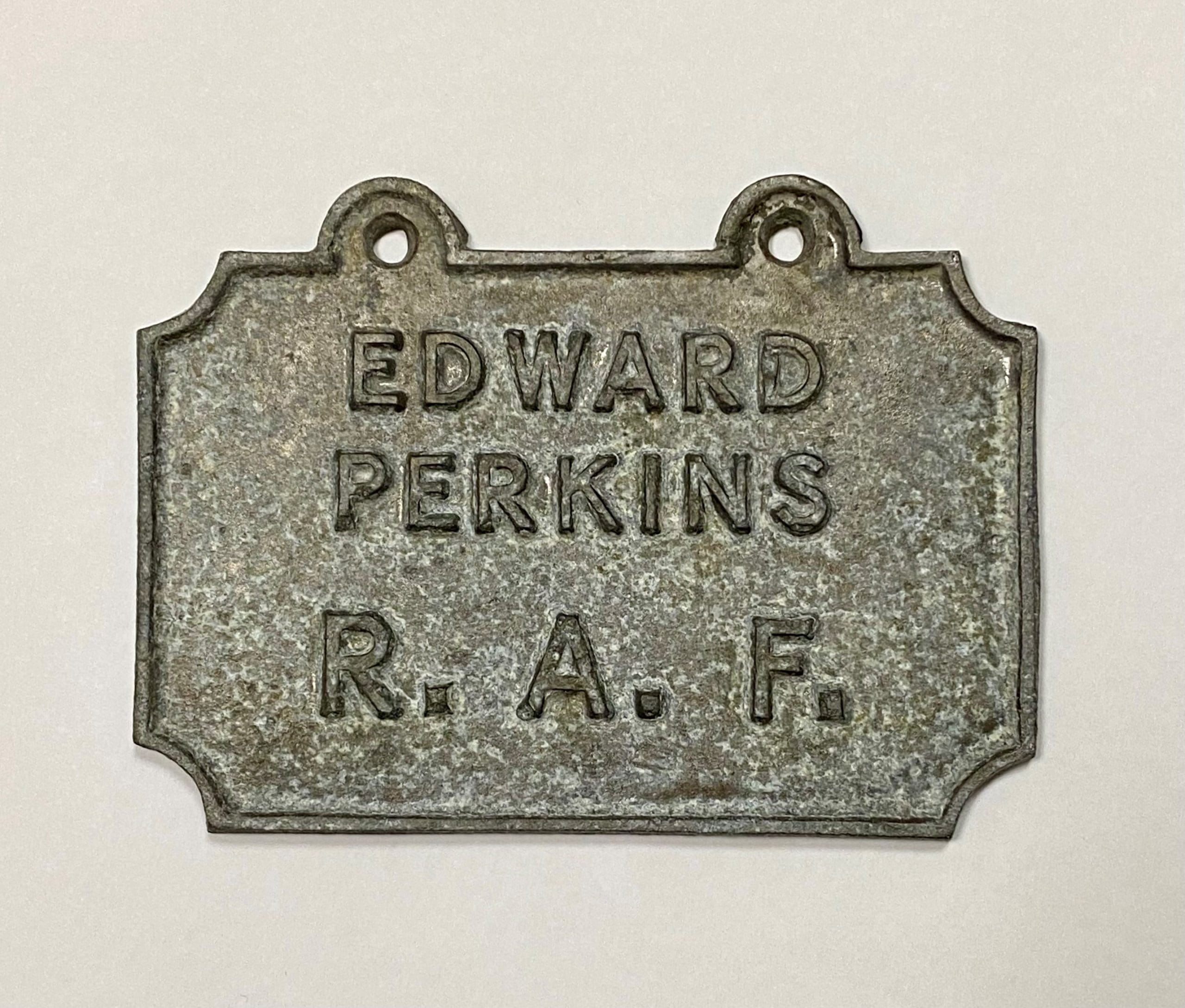
When planted, each tree had a metal collar with the name of a serviceman inscribed. However, over time some of the trees died and the metal collars lost. While the location of most of these collars is now unknown, Elmbridge Museum holds two of the original collars in their collection. These belong to John Richard Marshall (R.E) and Edward Perkins (R.A.F).
John Richard Marshall was born on 11th March 1920 at Chippings Farm, Cobham. In 1924 he and his parents, William and Louisa, and his sister, Alice, moved to 2, Farm Cottages, where his father ran the Schiff Home Farm providing fresh milk, eggs and vegetables for the hospital.
John was very musical and played the accordion. He also sang in the choir in St Mary’s Church, Stoke D’Abernon, and took part in Sunday School plays and concerts at Cobham School. After leaving school, John began an engineering apprenticeship at the Purefoy Engineering Works in Tilt Road. He later enrolled in the bomb disposal squad.
In the early days, the bomb disposal units were equipped with very few instruments. Often these men were only supplied with a stethoscope, leather gloves, hammer and chisel to dismantle bombs. The life expectancy of a Royal Engineer Bomb Disposal Officer was just ten weeks at the height of the bombing raids. By late 1940 bomb diffusing equipment was becoming more sophisticated, but death rates remained high.
On 22nd May 1941, John was attempting to defuse an unexploded bomb at the John Brown & Co shipyard in Clydebank. He had sent the rest of his crew to safety while he bravely tried to defuse the bomb alone. Despite this heroic attempt, the bomb detonated with a catastrophic result. John died instantly, he was 21 years of age.
John’s plaque can be found on memorial tree number 35.
Edward Leslie John Perkins was born on 4th April 1920 in London. He was educated in John Fisher School, Purley, and was a keen swimmer and walker. By 1939, his parents had moved to Cobham.
Edward joined the R.A.F. in 1936 as an aircraft apprentice. He trained as a pilot in America and received his wings in 1942.
In May 1944, Edward flew 8 operations during preparations for D-Day, including in the raid against Panzer training camp at Mailly-Le-Camp on 3rd May when 42 Lancasters were shot down by night fighters.
Edward was tragically killed while flying a Lancaster ND981. This was one of six aircraft which had taken off from R.A.F. Coningsby to practise formation flying. As the formation approach Crowland and began a gentle turn, Lancaster ME625 began to bounce. It was caught in the slipstream of the landing aircraft, sailed upwards and plunged on to Edward’s plane (ND981). Both aircraft crashed to the ground. Only one crew member survived by escaping by parachute.
Edward was 24 years old when he was killed in that tragic accident. His plaque can be found on memorial tree number 38.
Restoring the Avenue of Remembrance
Cobham’s Cherry Tree Avenue of Remembrance
In 2017 it was agreed that all the cherry trees should be replaced and that a uniform avenue would once again be created in honour of the brave servicemen from Cobham who lost their lives in the Second World War.
While researching the details of the servicemen included in the memorial, two additional names were identified which had not been included in the original avenue.
All the trees were replaced in February 2018, and the original layout was modified to include the two additional trees. The new layout is what stands today.
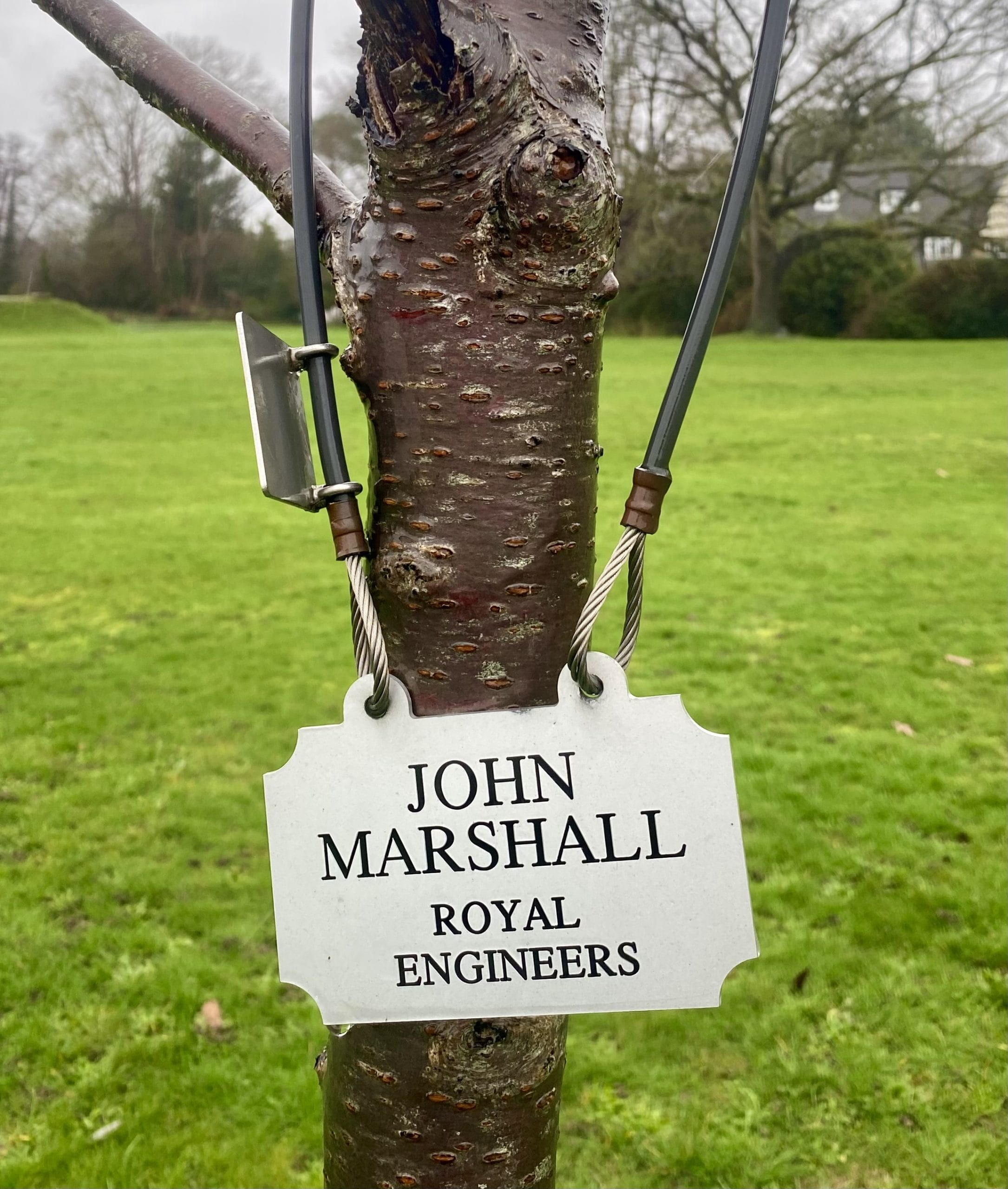
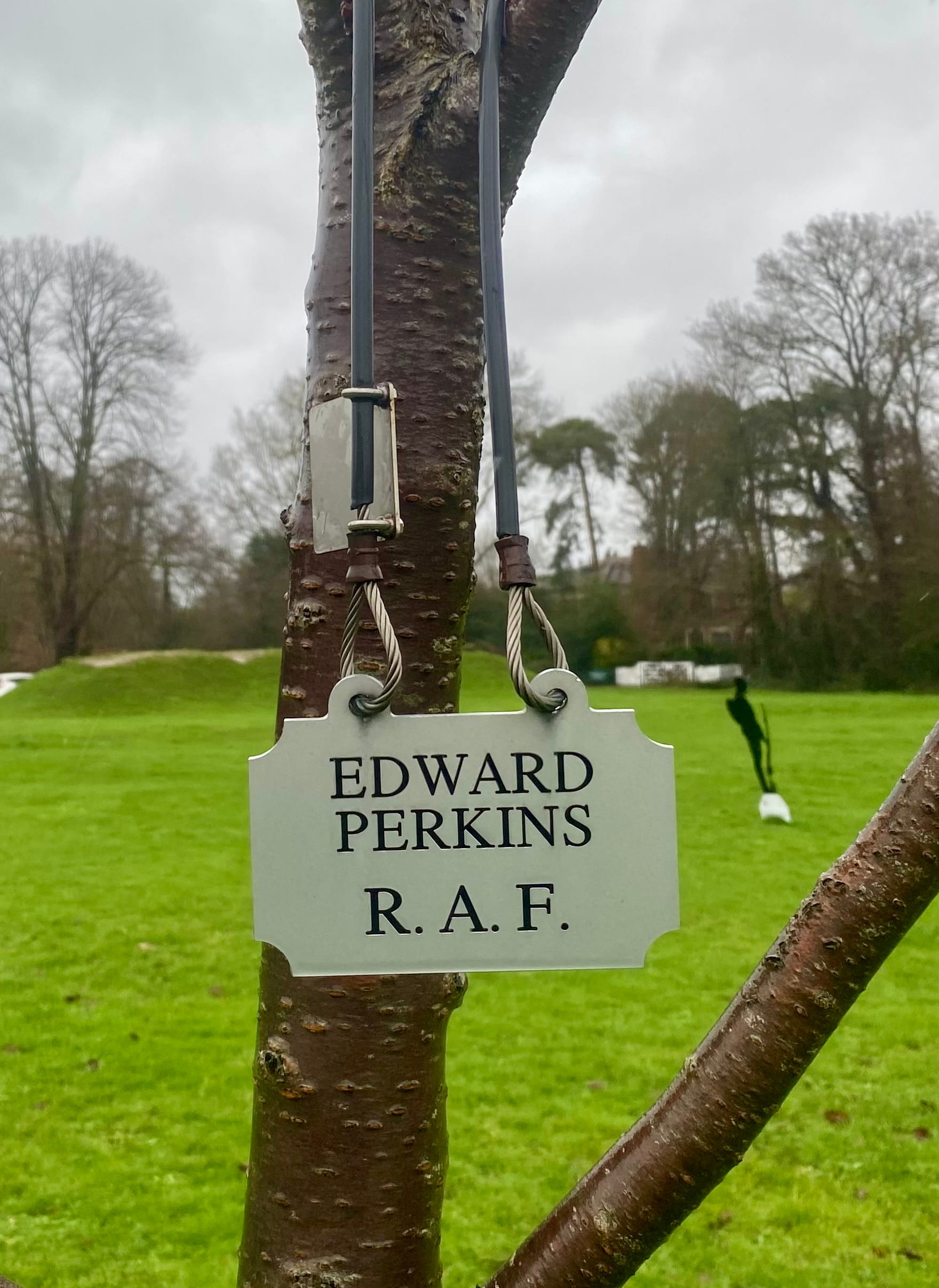
In November 2023 the Cobham Conservation & Heritage Trust reinstated new metal collars for all the servicemen.
Each collar also features a QR code which allows visitors to visit the Cobham Heritage website and view the details of the servicemen represented by that tree.
John Marshall's cherry tree on The Avenue of Remembrance in Cobham
Edward Perkins' cherry tree on The Avenue of Remembrance in Cobham
Explore Further
Interested in learning more about The Avenue of Remembrance?
Hidden Treasures of the Second World War
Take a closer look at Second World War objects from the museum's collection in this behind the scenes blog by Exhibitions and Interpretation Officer, Amy.
Commemorating VJ Day: 75 Years On
To mark the 75th anniversary of V.J Day, Councillor Vicki Macleod has written an account of the experiences of her father, Norman Edward Richardson - a Naval Air Gunner who served in the Pacific War against Japan.